
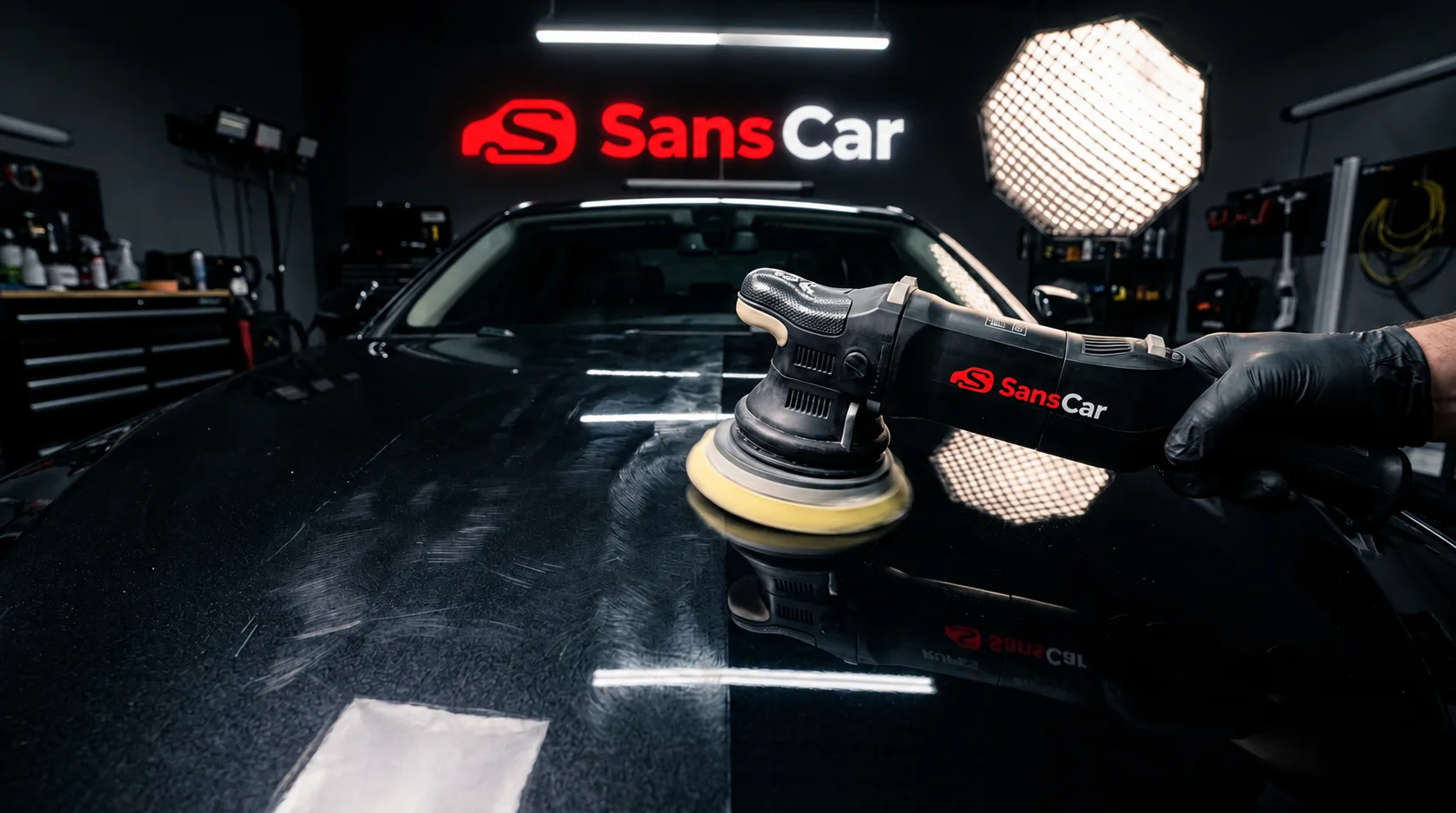
A clean car can still look hazy under sunlight or workshop lights. Fine wash marks, oxidation and shallow defects scatter reflections across the paint. Car polishing can improve that appearance, but it should start with an inspection of the finish rather than a promise to remove every scratch.
What polishing actually changes
Polishing uses a machine, pad and abrasive compound to refine the painted surface. The level of correction depends on the defect, the paint system and how much clear coat can safely be worked. A light single-stage polish may improve gloss and reduce minor swirls. More involved correction may be considered for heavier marks, but it is not automatically the right choice for every vehicle.
Washing and polishing do different jobs. Washing removes surface dirt; polishing addresses some marks that remain after the car is clean. If contamination is still bonded to the paint, it should be assessed and removed appropriately before polishing.
Marks that may respond well
- Fine swirl marks that become obvious in direct light.
- Light wash marks and mild dullness on otherwise sound paint.
- Some shallow surface defects, after the area has been inspected.
The word may matters. The same-looking mark can sit at a different depth on two cars. Previous polishing, repainting, age and panel condition all affect the safe approach.
Where polishing stops
A deep scratch, stone chip, peeling clear coat or damaged paint is not simply a polishing problem. Aggressive polishing to chase a deep mark can remove too much material. In some cases the sensible recommendation is to improve its appearance without trying to erase it; in others, denting and painting is the appropriate conversation.
We also would not judge the result solely from a dramatic before-and-after photograph. Lighting can exaggerate both defects and improvement. Look at the car in more than one light and agree on what a good result means for your daily use.
What happens before a polishing visit?
Show the studio the panels that concern you. Mention any repainting, earlier polishing or protective coating. A photograph of a mark in the light where you notice it can help. At SansCar, the surface is assessed before the polishing approach is discussed, including whether correction is worthwhile and what improvement is realistic.
Keeping the finish after correction
Correction does not make paint immune to future wash marks. A careful wash routine is the first line of maintenance. A ceramic coating may make routine cleaning easier, while paint protection film is a separate option for impact-prone areas. Neither replaces sensible washing.
If the car is a daily driver, a balanced improvement that preserves the finish may make more sense than pursuing every last mark. The right decision is the one that fits the car's condition and how you intend to maintain it.