
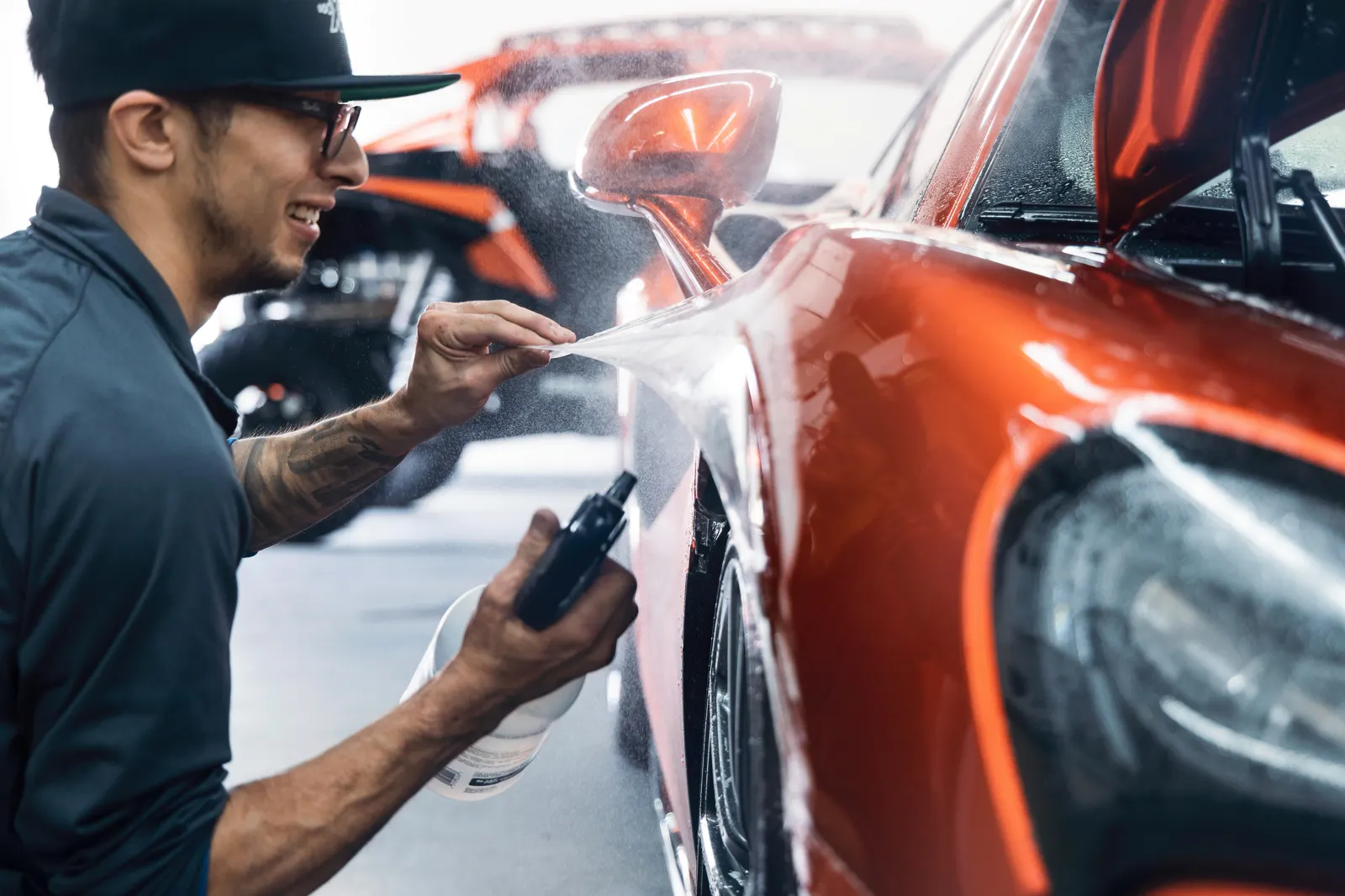
If you are comparing paint protection film and ceramic coating for a car in Pune, start with one simple distinction: PPF is a physical film applied over painted panels, while ceramic or graphene coating is a liquid-applied surface treatment that cures into a protective layer. PPF is the stronger choice for areas exposed to stone chips and abrasion. A coating is useful for gloss, easier washing and resistance to everyday contamination. Some cars benefit from one; others benefit from a carefully planned combination.
The Quick Answer
- Choose PPF when your main concern is stone chips, road debris, light abrasion and protecting high-impact painted panels.
- Choose ceramic or graphene coating when your priority is gloss, easier maintenance, water behaviour and day-to-day surface protection.
- Consider combining them when the front and other vulnerable panels need film while the remaining painted surfaces need easier upkeep.
- Do not choose by warranty length alone. Film quality, paint preparation, installation quality, coverage, maintenance and claim terms all matter.
Why the decision matters for Pune driving
A daily-driven car around Handewadi, Undri, NIBM, Mohammed Wadi and Kondhwa can face construction dust, loose road grit, crowded parking, tree residue, strong sun and monsoon contamination. No protection makes a car damage-proof, but the right system can reduce avoidable wear and make maintenance more predictable. The best choice depends on where the car is parked, how often it travels, the routes it uses, the condition of the paint and how long the owner plans to keep it.
What paint protection film actually does
Paint protection film is a transparent urethane-based film fitted over selected painted panels or, in a full-body package, most exterior painted surfaces. Its value is physical separation: road debris and light contact reach the film before they reach the clear coat. Coverage can be planned around the areas that receive the most wear, such as the front bumper, bonnet edge, mirror caps and door edges, or extended to broader panel coverage.
PPF cannot prevent every dent, deep cut or high-energy impact. It also does not correct defects already present in the paint. The surface should be cleaned and assessed before installation because swirls, chips or poor previous repairs may remain visible underneath. Edges, curves, cut patterns and finishing quality deserve as much attention as the film specification. Learn more about our approach to paint protection film in Handewadi.
What ceramic and graphene coatings actually do
A professional coating bonds to a properly prepared surface and changes how that surface behaves. It can add gloss, create a slicker finish and make routine washing easier because dirt and water are less likely to cling in the same way. Coatings can also help the finish resist some environmental contamination, but they are not a substitute for careful washing and they do not provide the same physical impact protection as PPF. Independent technical data from manufacturers such as 3M Ceramic Coating documents how professional liquid treatments chemically anchor to clear coats to enhance slickness and chemical resistance.
The preparation often determines the visible result. Applying a coating over dull, contaminated or heavily swirled paint does not remove those defects. Depending on the car, decontamination and paint correction may be recommended first. A truthful coating proposal should separate the cost and purpose of surface preparation from the coating product itself. Explore our dedicated ceramic and graphene coatings service options.
PPF and ceramic coating compared
| Decision Factor | Paint Protection Film (PPF) | Ceramic or Graphene Coating |
|---|---|---|
| Main purpose | Physical protection for painted panels | Surface behaviour, gloss and easier maintenance |
| Stone-chip protection | Designed for impact-prone areas, within product limits | Not a replacement for film |
| Swirl & scratch resistance | Can absorb some light abrasion; not scratch-proof | Can reduce contamination-related wear; not scratch-proof |
| Preparation | Clean, inspect and correct where appropriate before film | Clean, decontaminate and polish where appropriate before coating |
| Coverage | Selected panels, front package or broader coverage | Usually applied across suitable exterior surfaces |
| Maintenance | Film-safe wash method and periodic inspection | Careful wash method and product-compatible maintenance |
| Best question to ask | Which panels need physical protection? | How should the finish look and behave during maintenance? |
When essential or partial PPF makes sense
Partial coverage can be a sensible answer for a daily-driven car when the budget is focused on high-impact zones. The exact panels should follow the vehicle design and driving pattern rather than a generic package name. A low bonnet, wide front bumper or prominent mirror caps may receive more road exposure. Door edges and luggage-loading areas face different types of contact. Ask the installer to identify every covered piece and show where film edges will sit.
When full-body PPF makes sense
Broader coverage may suit a new, premium, dark-coloured or long-term ownership vehicle when preserving the painted finish is a high priority. It also raises the importance of installation environment, panel preparation, edge work, aftercare and warranty documentation. Before approving the job, confirm what is excluded, how pre-existing chips are handled, whether panels will be removed, how warranty claims work and which maintenance products are recommended.
When coating alone is the better fit
Coating alone may be appropriate when the car is mainly used in lower-impact conditions, the owner values gloss and easier cleaning, or the budget is better directed toward restoring and maintaining the finish. It is also useful for owners who understand that regular washing still matters. If stone chips are the main concern, however, a coating should not be sold as an equivalent to film.
Can PPF and coating be used together?
Yes, provided the product system and installation order are planned correctly. A common approach is PPF on vulnerable panels and a compatible coating on the remaining paint, with an appropriate topper or coating on the film if recommended by the film manufacturer. The installer should explain which surfaces receive which product, how the car should be washed and whether maintenance differs between film and unfilmed panels.
Seven questions to ask before booking
- What problem are we solving: chips, swirls, gloss, easier cleaning or a combination?
- Which exact panels and edges are included in the quote?
- What paint inspection and preparation are included before installation?
- Which film or coating is being used, and what does the written warranty actually cover?
- How will existing scratches, repainted panels or stone chips affect the result?
- What wash and maintenance routine is required after delivery?
- Can I inspect recent work under clear lighting and see how edges and curves are finished?
How SansCar approaches the choice
At SansCar in Handewadi, the starting point is the car in front of us. We inspect the visible paint condition, ask how the car is used and discuss what the owner wants to improve. That conversation helps separate must-have protection from optional upgrades. The objective is a clear plan: preparation, coverage, product choice, aftercare and the expected limitations of the work. Discover more at our car detailing studio hub.
If you are in Handewadi, Undri, NIBM, Mohammed Wadi, Kondhwa or nearby Pune areas, request a visit before deciding between PPF and ceramic coating. Bring the car clean if practical, point out any previous paintwork, and ask for the proposed coverage in writing.
COMMON QUESTIONS ON PPF & COATINGS
Is PPF better than ceramic coating?
Neither is universally better. PPF is better for physical protection against road debris and abrasion; a coating is better for gloss and easier maintenance. The right choice follows the risk you want to reduce.
Does ceramic coating stop scratches?
No coating makes paint scratch-proof. Careful washing remains important, and deeper contact can still mark the finish.
Does PPF change the colour of the car?
Quality clear film is designed to preserve the appearance of the paint, but finish, age and clarity vary by product. Inspect samples and confirm whether you want gloss or matte film.
Should a new car be polished before protection?
Not automatically. New paint can still have transport marks or dealer-installed swirls, so the finish should be inspected first and corrected only where appropriate.
How do I get a quote?
A useful quote identifies the vehicle, paint condition, exact coverage, preparation, product, warranty terms and aftercare. An in-person inspection is the most reliable starting point.