
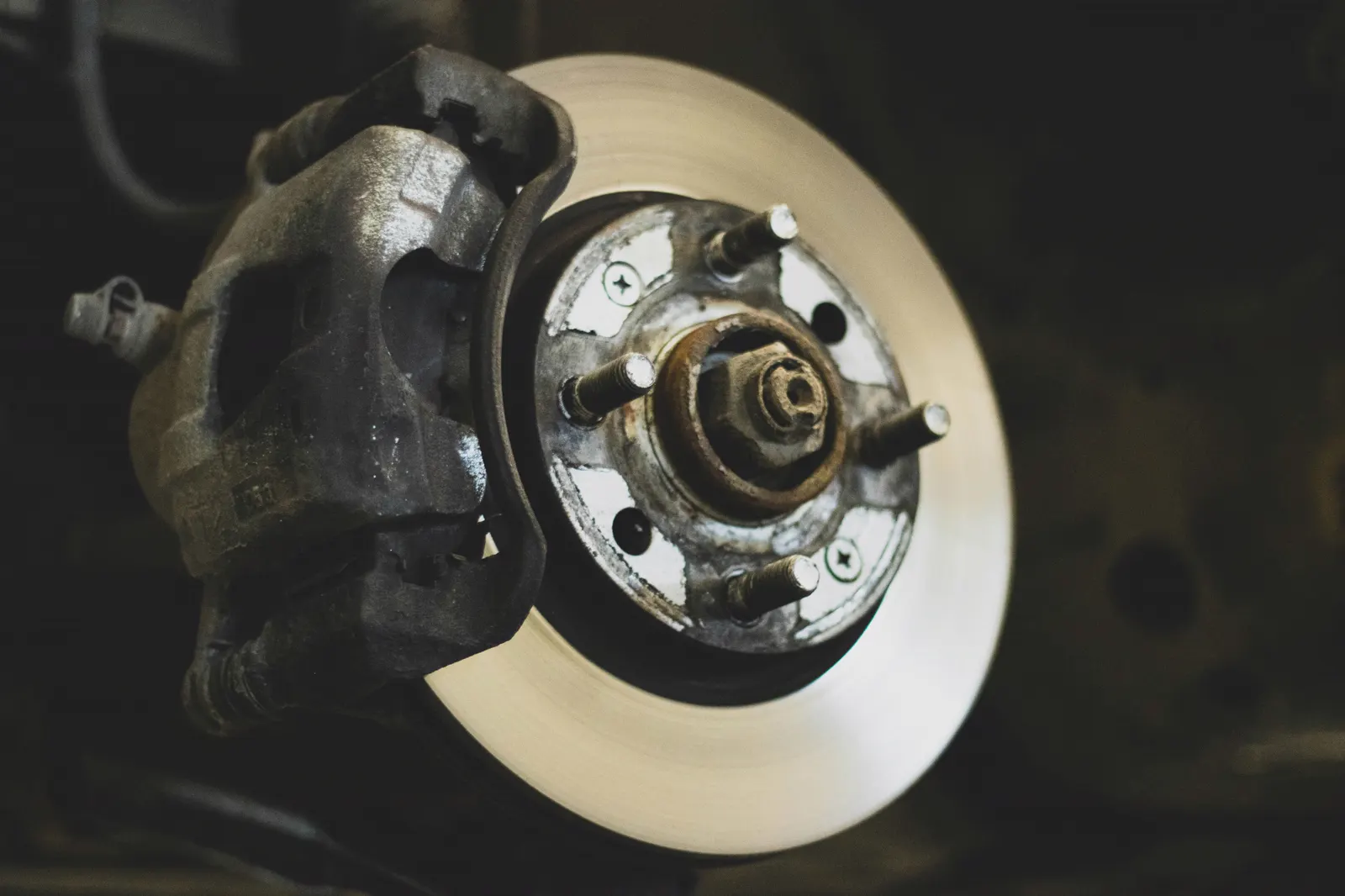
A new brake noise, steering pull, vibration or change in ride quality is vital information worth acting on. These symptoms do not identify one failed part by themselves, but they help a qualified technician decide where to inspect first. If the car feels unstable, braking performance drops sharply, a warning light appears, or steering control feels loose, stop driving safely and arrange professional inspection.
The Quick Warning-Sign Checklist
- Squealing, grinding, scraping or clicking while braking.
- A brake pedal that feels unusually soft, spongey, hard or sinks to the floor.
- The car pulls to one side during braking or cruising on flat roads.
- Steering-wheel vibration, especially at specific highway speeds or under braking.
- Clunking, knocking or creaking over speed breakers or while turning.
- Uneven tyre wear, an off-centre steering wheel or frequent steering corrections.
- A sudden change in ride height, excessive bouncing or oil leaking from a suspension damper.
Brake warning signs and what they mean
Brake squeal can come from acoustic wear indicators, road dust contamination, glazed brake pads, worn anti-rattle clips or grooved rotors. A metallic grinding noise usually means friction material has worn down completely to the metal backing plate, which can score the brake rotor and severely reduce stopping power. Continued driving with grinding brakes increases repair costs and poses serious safety risks.
Pedal feel is equally critical: a soft, spongy pedal often points to air in the hydraulic brake fluid lines or moisture boiling inside old fluid. A hard pedal may indicate a failed vacuum brake booster. Pulsation through the brake pedal during normal stops typically indicates rotor thickness variation or warped brake discs. Learn about our comprehensive brakes and suspension maintenance services.
Suspension warning signs on Pune roads
Suspension components manage tyre contact, road shock absorption and vehicle stability. Knocking over potholes, creaking over speed breakers, excessive body roll or nose-diving during stops point to worn rubber bushings, ball joints, sway bar links, strut top mounts or leaking shock absorbers.
South Pune roads across Handewadi, Undri, Mohammed Wadi and Pisoli subject suspension components to heavy cycling due to uneven surfaces and abrupt speed breakers. After a hard pothole impact, visually inspect your tyre sidewalls and rims for bends or bulges. If your steering wheel changes angle or the vehicle floats over dips, schedule an inspection before suspension misalignment damages other chassis components.
Wheel alignment signs
Wheel alignment refers to the geometric angles of your wheels relative to the vehicle chassis and manufacturer specifications: camber, caster and toe. Common symptoms of misalignment include the vehicle constantly drifting to one side on a flat road, the steering wheel resting crooked while driving straight, and rapid feathering or inner-shoulder tyre wear.
Before adjusting wheel alignment, a technician should check tyre pressures, tyre wear patterns and suspension joints. Worn ball joints or unbalanced wheels can mimic alignment symptoms, making proper pre-checks essential. Learn more about our computerized wheel alignment and balancing service.
Symptom guide: what drivers notice & what to do
| What the Driver Notices | Useful Information to Record | Recommended Next Step |
|---|---|---|
| Noise while braking | High squeal or metal grinding; front or rear wheels; cold or warm; wet or dry | Brake inspection; avoid delay if grinding or stopping distance increases |
| Car pulls left or right | Pulls during braking or while cruising; road camber; tyre pressures | Check tyre pressures, then inspect brakes, steering, suspension and alignment |
| Steering vibration | Specific speed range (e.g. 80-100 km/h) or only under brake application | Wheel balancing, tyre runout inspection, brake rotor check |
| Clunk over bumps | Front or rear; one side; straight road or when turning steering wheel | Suspension bushing, sway bar link, strut mount and ball joint inspection |
| Uneven tyre wear | Inner edge, outer shoulder, center baldness or cupping patches; tyre age | Tyre condition, suspension components and computerized wheel alignment check |
| Vehicle keeps bouncing | Which corner; floating sensation after speed breaker; loaded or unloaded | Damper, strut leak test, spring check and bump stop inspection |
What to tell the workshop before an inspection
- When you first noticed the symptom and whether it is gradually becoming louder or more frequent.
- The exact driving conditions that trigger it: speed, road surface, weather and whether it happens when accelerating, cruising or braking.
- Where the sensation is felt: through the brake pedal, the steering wheel rim, the driver seat or the chassis body.
- Any recent impacts: hitting a severe pothole, curbing a wheel, recent tyre replacement or suspension work.
- Any warning indicators: ABS lights, traction control warnings, brake fluid alerts or burning smells.
- Service history: when brake fluid was last flushed and which parts were previously replaced.
Learn more about our structured approach to routine vehicle maintenance and periodic inspections.
Why diagnosis must come before replacing parts
A symptom or diagnostic fault code is a starting clue, not a guarantee that a specific part is bad. For instance, a vehicle pulling to the left might be caused by an under-inflated tyre, a dragging brake caliper, a worn lower control arm bush or misaligned toe angle. Replacing parts without measuring and verifying root causes leads to unnecessary expenses and unresolved safety concerns. A sound workshop process combines customer description, visual ramp inspection, precision dial gauges and a controlled road test.
When to stop driving immediately
Pull over safely and arrange roadside assistance or towing if your brake pedal suddenly drops to the floor, braking power fades drastically, the steering wheel becomes difficult to turn, an alloy wheel is loose, brake fluid is actively pooling near a wheel, or a severe grinding impact noise occurs. Never compromise on steering or braking integrity on Pune roads.
Mechanical inspection at SansCar Handewadi
SansCar provides professional mechanical care and maintenance alongside our detailing studio in Handewadi. Tell our technicians what you noticed, when it happens and any recent repairs. We inspect the vehicle on the ramp, explain our findings transparently, provide an upfront estimate and complete work with genuine components. Drivers from Handewadi, Undri, NIBM, Mohammed Wadi, Kondhwa and nearby Pune areas can call or visit our studio to arrange an inspection. Explore our full mechanical services suite.
BRAKE, SUSPENSION & ALIGNMENT FAQS
Does brake squeal always mean the pads are finished?
Not always. Light squealing can be caused by dust accumulation, surface glazing or moisture. However, persistent squealing or any metallic scraping should be inspected immediately to protect rotors and ensure safety.
Can wheel alignment fix every vehicle pull?
No. Unequal tyre pressures, radial tyre pull, sticking brake calipers and worn suspension bushings can all cause a car to pull to one side even if alignment angles are within spec.
Should alignment be checked after a hard pothole hit?
Yes. If you notice steering wheel off-center, new vibrations or pulling after hitting a pothole, having your alignment and rim condition inspected prevents rapid uneven tyre wear.
Can an OBD scan tool identify suspension problems?
No. Standard mechanical suspension components like bushings, springs and shock absorbers do not have electronic sensors. They require hands-on physical inspection by a trained technician.
How often should brakes and suspension be checked?
Brakes and suspension should be checked at every periodic service (typically every 10,000 km or 12 months) and immediately whenever any unusual noise, vibration or steering change appears.